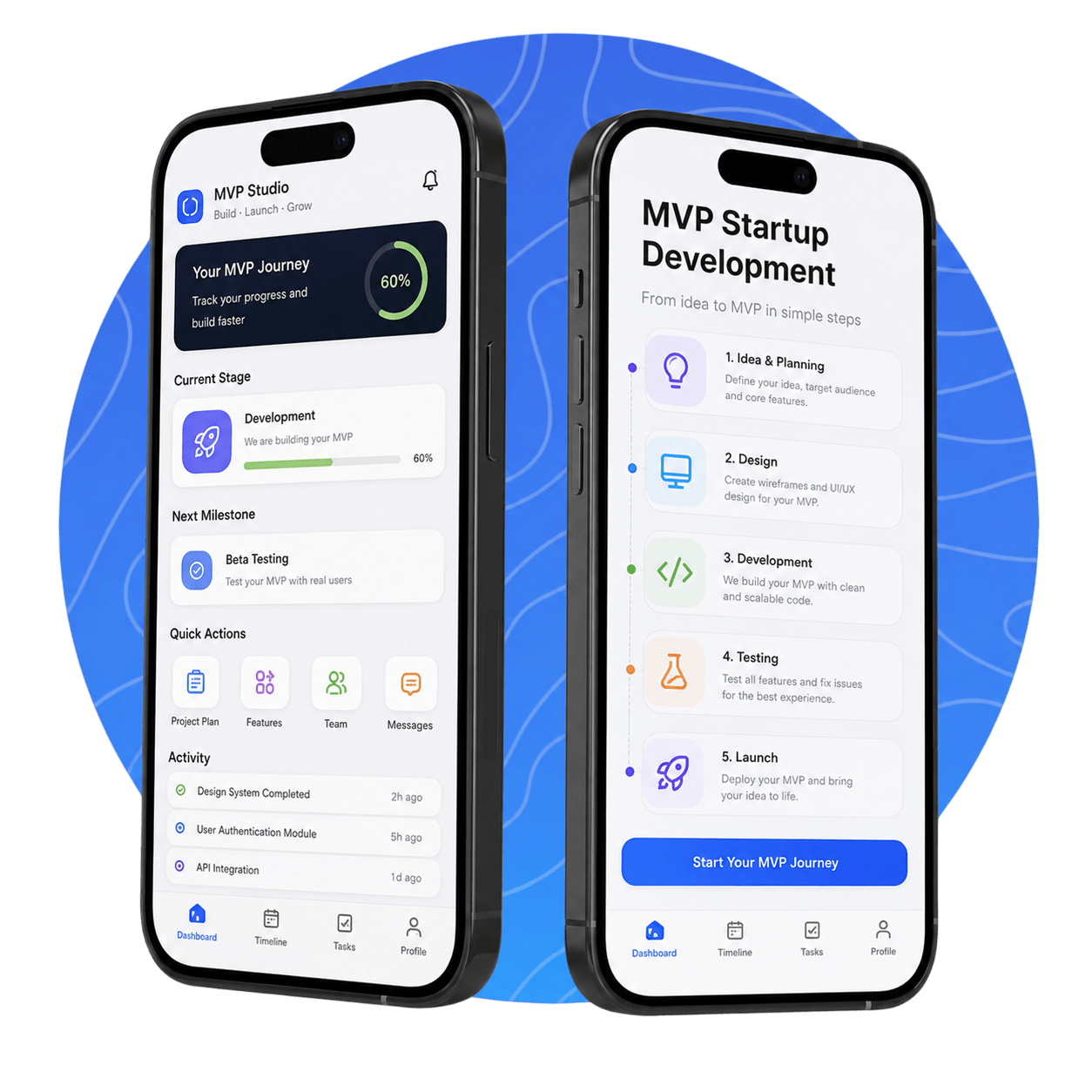
Building too much too early can turn a promising idea into an expensive mistake. Trifleck helps founders turn early concepts into a focused minimum viable product that real users can actually use, test, and react to. Our MVP development team keeps version one lean, purposeful, and ready for what comes next.
Some founders come to us with a sketch. Others already have a product that is starting to crack under growth. Trifleck works at both ends. Our MVP development services give you the engineering support you need now, without forcing you into more product than the business is ready for.
Have an idea that does not fit neatly into an existing product model? We build custom MVPs around the one thing your product needs to prove first. No bloated feature list. No building six months ahead of your users.
Need your first release in customers’ hands? Our app development team builds focused mobile MVPs for iOS, Android, and cross-platform launches, with the core experience polished enough to earn real user feedback.
From SaaS products to dashboards, portals, and customer-facing platforms, we build web MVPs that do the important job well first. The result is something you can launch, learn from, and keep building on.
Maybe version one already worked. Now traffic is growing, features are piling up, or the original codebase is becoming a bottleneck. We help strengthen the product without throwing away everything that got you this far.
Ideas are easy to present on a whiteboard. Products have to survive real users.
Our MVP development and app development work is shaped around that difference. We build products people can use, businesses can learn from, and teams can keep improving once the first release is out in the world.
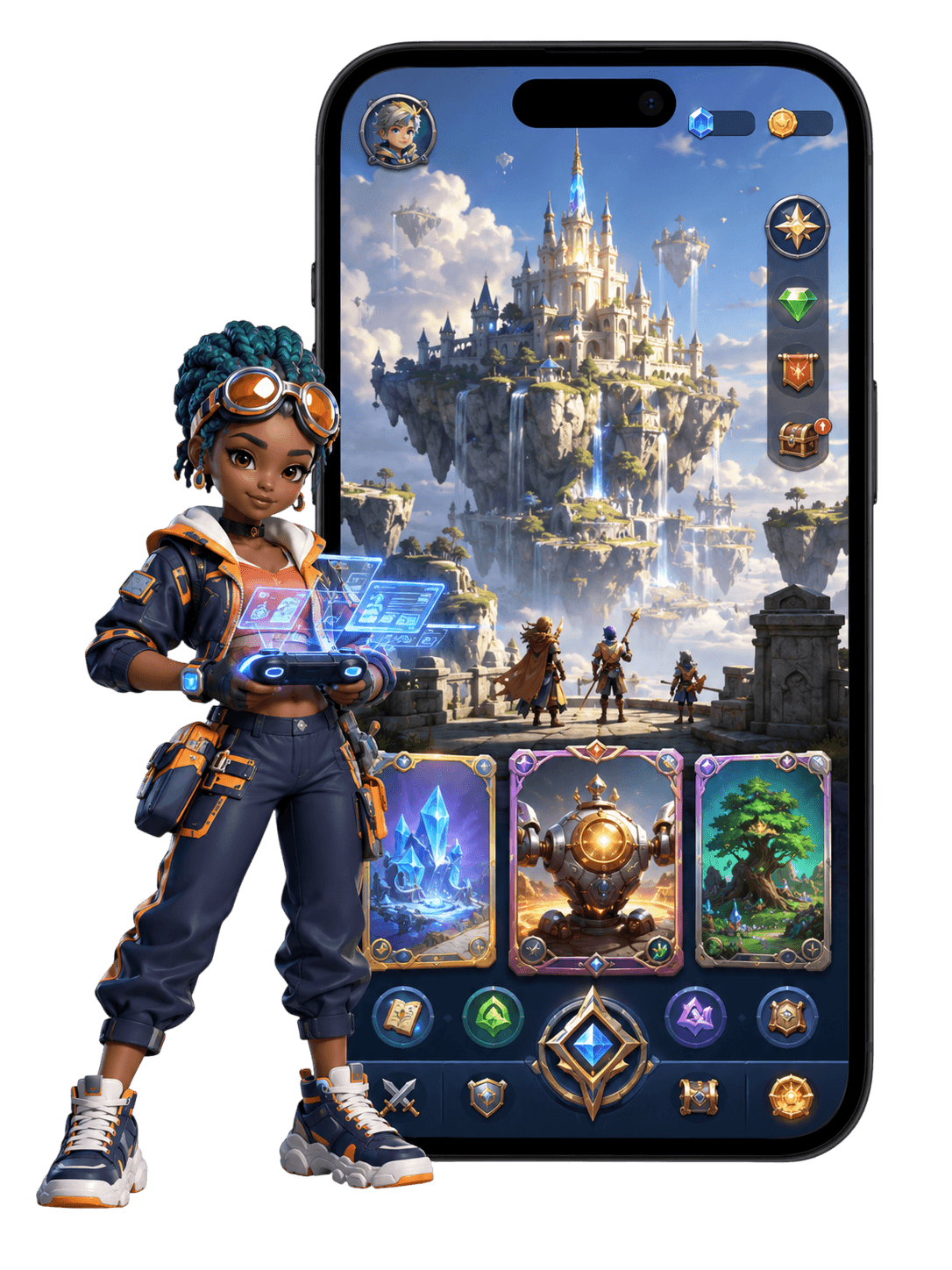
Avelyron Games came to Trifleck with sketches, story ideas, and an ambitious dark-fantasy concept. We shaped it into Shadowbound Trails, a complete mobile action-adventure game featuring touch-optimized combat, handcrafted environments, progression systems, puzzles, and cinematic storytelling. All engineered to deliver smooth performance across mobile devices.
A successful MVP is less about how much you build and more about making the right product decisions early. Our MVP development process keeps strategy, design, engineering, and validation connected from the beginning.
We start with the product idea, the customer, and the business behind it. What problem are we solving? Who cares enough to use it? What assumption needs proof first?
This is where good MVPs are usually won. We separate what the product needs on day one from what can wait until users give us a reason to build it.
We design around the actions users came to complete. Screens stay focused. Journeys stay clear. Anything that creates friction without adding value gets questioned.
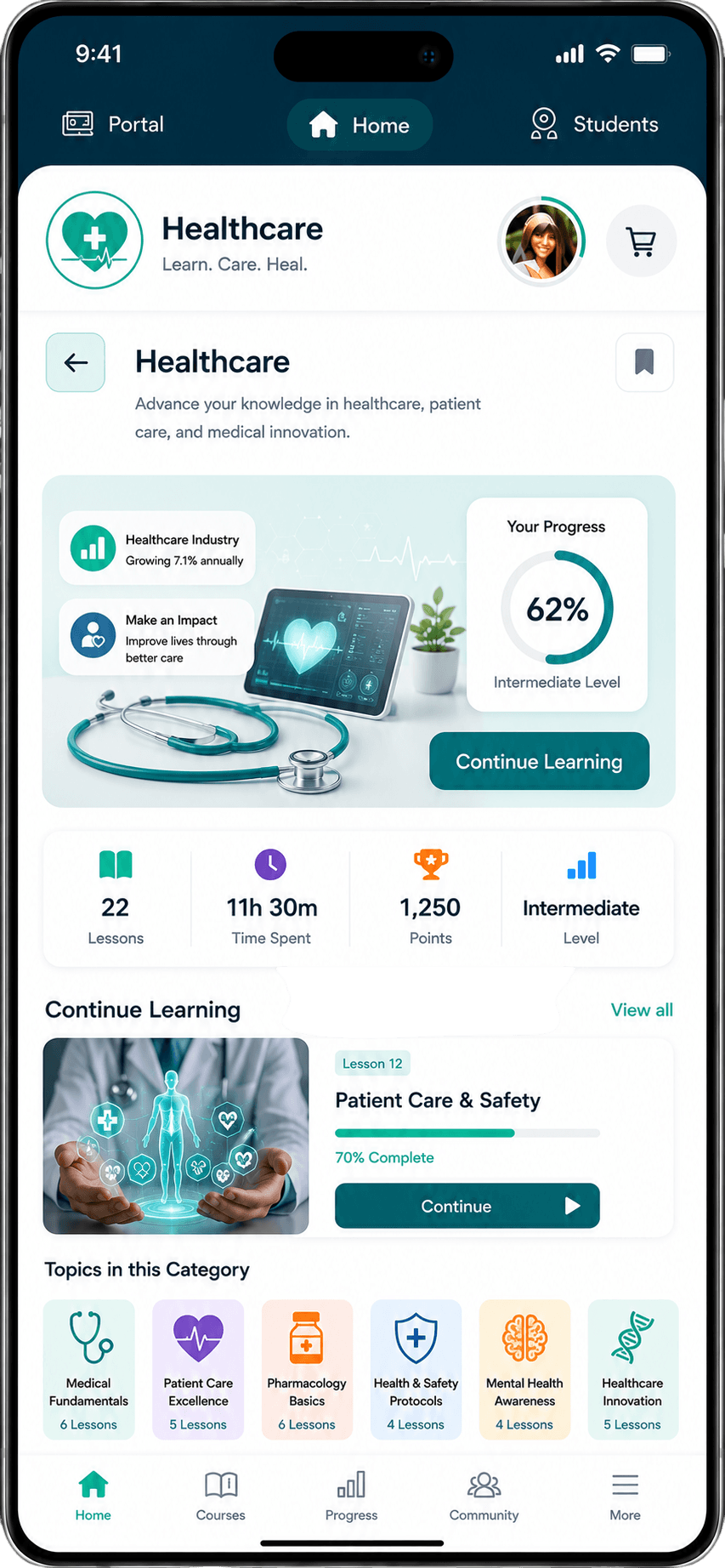
Build healthcare MVPs for patient engagement, appointment booking, remote care, internal operations, or digital health services. We focus on creating simple, reliable experiences while considering the privacy, accessibility, and workflow requirements that set healthcare app development apart from building an ordinary consumer product.

A minimum viable product should answer questions, not simply give you something to launch. Done well, it helps you replace assumptions with evidence before more money, more features, and more people get tied to the wrong direction.
Do people care enough about the problem to try your solution? Early usage gives you a far better signal than opinions collected before anyone has touched the product.
they ignore, and where future app development effort is actually worth spending.
Customers rarely use a product exactly as the team imagined. Watching real behavior exposes confusing flows, unexpected habits, and friction that would be difficult to spot inside a planning document.
Interest is useful. Willingness to pay is stronger. Your MVP can help test pricing, subscriptions, transactions, or other revenue assumptions before the business model becomes expensive to change.
Bring it to Trifleck. We’ll help you validate the concept, define the right features, and turn your idea into a focused MVP built for real users and real feedback.
A startup does not need a development team that agrees with every feature request. It needs one that knows when to ask why.
We look beyond tickets and feature lists. Every major decision is weighed against the user problem, business goal, and what your first release actually needs to prove.
More features do not make a stronger MVP. We keep scope under control so your time and budget go toward what gives the product its best chance of learning something useful.
A minimum viable product can be lean without being disposable. We make practical architecture choices that support the product today without making tomorrow unnecessarily difficult.
You should always know what is happening with your product. We keep decisions, priorities, progress, and roadblocks visible instead of hiding them behind technical jargon.
Designers, engineers, QA specialists, and product thinkers work around the same product goals. You do not have to coordinate disconnected teams just to keep development moving.
Launch is where assumptions start to meet reality. Trifleck can stay with you for new features, product improvements, scaling, and ongoing app development once real usage begins shaping the roadmap.
The best technology stack is not the one with the most fashionable tools. It is the one that fits the product, team, budget, expected usage, and what happens if the idea takes off. Trifleck selects technologies around those realities so your first release stays practical without boxing the product in too early.
Choosing an MVP development company means trusting a team with more than code. You are trusting them with time, budget, and a product that may still be finding its place in the market.
Based On Clutch Review
Startups and growing companies choose Trifleck to turn ambitious product ideas into digital experiences built for real-world use.
You do not need every answer before you start. Bring us the idea, the challenge, or the product you already have. We’ll help you work out what deserves to be built next.
MVP development is the process of building the smallest usable version of a product that can solve a core problem and be tested with real users. It helps startups validate demand, collect feedback, and make better product decisions before investing in a full-scale application.
The cost of MVP development depends on the product scope, platform, features, integrations, design requirements, and technical complexity. A simple web MVP may cost far less than a marketplace or mobile product with payments, user roles, real-time features, and custom backend systems.
Most MVP timelines depend on how tightly the first release is scoped. A focused product with a small number of core features can move much faster than an MVP overloaded with secondary functionality. At Trifleck, we define the critical user journey first so development stays practical and predictable.
A minimum viable product should include only the features required to deliver its core value to users. Every feature should help solve the main problem, complete an essential user journey, or test a key business assumption. Features that do not support those goals can usually wait for later releases.
A prototype demonstrates how a product may look or work, while an MVP is a functional product that real users can actually use. Prototypes are useful for testing concepts and interfaces. MVPs go further by generating real-world feedback, usage data, and market evidence.
Startups build MVPs to test an idea before committing too much time and money to it. An MVP can reveal whether users want the product, which features matter most, where the experience needs work, and whether the business model deserves further investment.
Yes, a well-built MVP can evolve into a full-scale product. The key is using an architecture that supports growth without overengineering version one. Trifleck builds MVPs with future development in mind so new features, users, and integrations can be added as the product gains traction.
The right platform depends on where your users are and how they need to interact with the product. A web MVP may suit SaaS platforms, dashboards, and browser-based services. Mobile app development is often better when the product relies on mobility, device features, or frequent on-the-go use.
Choose an MVP development company that understands product strategy as well as software engineering. The right team should help you challenge unnecessary features, define a realistic first release, explain technical trade-offs clearly, and support the product after launch rather than simply executing a feature list.
After launch, the next step is to learn from real users and improve the product based on evidence. Teams typically review user behavior, feedback, retention, performance, and feature adoption before deciding what to fix, add, remove, or scale in the next development cycle.
Yes. Trifleck can help modernize, stabilize, and scale an existing MVP. That may include improving architecture, fixing performance issues, reducing technical debt, refining user experience, adding integrations, or continuing app development as the product moves beyond its first release.
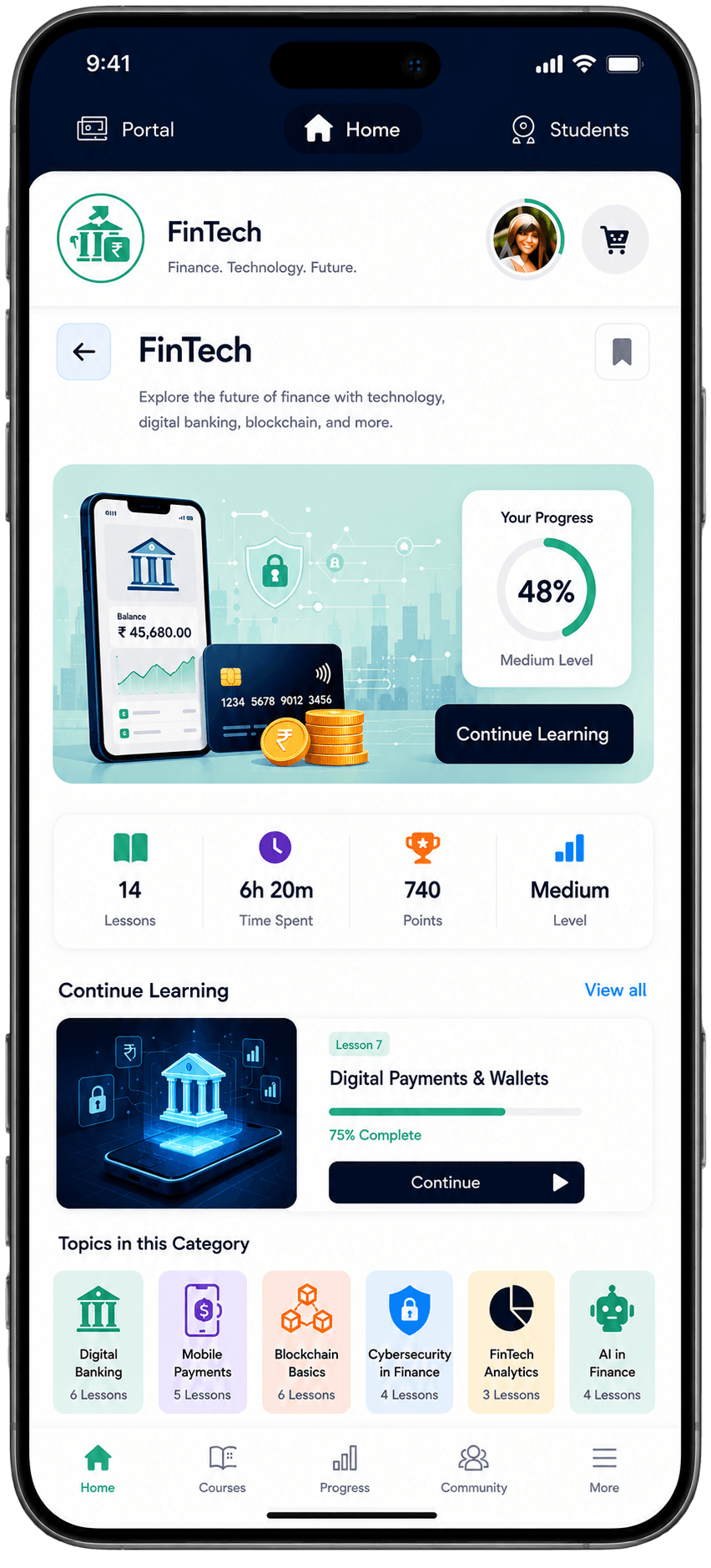
Trifleck builds MVPs for startups across industries including FinTech, healthcare, eCommerce, logistics, education, real estate, SaaS, and on-demand services. The development approach is adapted to the users, workflows, technical requirements, and market realities of each product rather than using one generic template.
Fill out form below with your details to start conversation with our expert.